

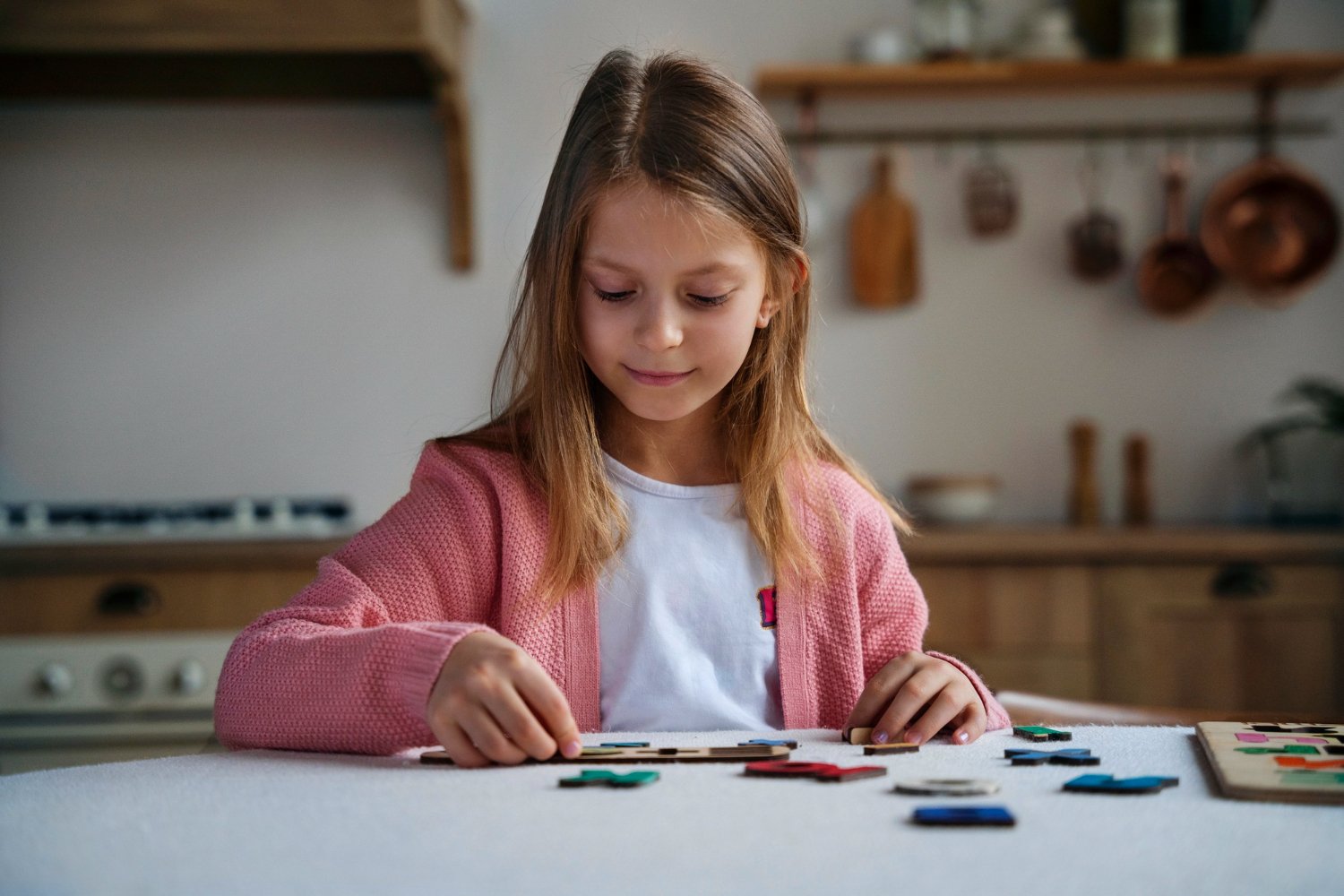
How to Choose the Right Coloring Book for a Child by Age
Coloring, often perceived as just a simple pastime for children, is in fact an extremely important tool for their overall development. This activity goes far beyond mere entertainment and serves as a foundation for forming key skills that directly influence a child’s cognitive, motor, and emotional development. A well-chosen coloring book becomes the first step in shaping a child’s positive attitude toward creativity and learning. If the choice is made incorrectly, for example, when a coloring book is too difficult for their age, it can lead to frustration and discourage interest in the process. On the other hand, the right choice, matching the child’s physical and psychological abilities, strengthens their confidence and builds perseverance.
The Role of Coloring Books in Child Development
One of the most important functions of coloring books is the development of fine motor skills. Fine motor skills are a set of small muscle movements that require precision, such as holding a pencil, fastening buttons, or tying shoelaces. Drawing and coloring are among the most effective ways to train these skills. By holding colored pencils, markers, or brushes, a child actively engages the small muscles of the fingers, hand, and wrist, which is critically important for later success in learning to write.
This process has a broader meaning than just physical exercise. The development of fine motor skills is directly connected to the development of thinking and mental activity. By recreating images on paper, the child develops symbolic thinking, for example, associating a drawn cat with a real cat or a cartoon cat. Such training provides the brain with fundamental preparation for more complex cognitive tasks that require not only manual dexterity but also the ability to work with abstract concepts.
Stimulating Cognitive Functions
Coloring books are a powerful tool for stimulating cognitive development. This activity requires observation, attention, and persistence. The child learns to concentrate on a task while ignoring distractions, which is a vital skill for further learning, especially at school. Coloring also helps to develop imagination, creative thinking, and memory, since the child must visualize how the picture will look in color and remember certain shapes and images.
In addition, the process of coloring fosters an artistic sense, as the child independently chooses colors and experiments with their combinations. This helps them understand the basics of color theory, patterns, and aesthetics, which are an integral part of creative education. It is not just copying but a conscious choice that stimulates imaginative thinking and builds confidence.
Emotional Development and Self-Expression
Drawing gives children a unique opportunity to express their emotions and feelings nonverbally. Through colors and images, they can convey joy, fears, or fantasies. This activity is also an effective way to relieve stress, helping children relax and focus on the creative process. When a child is given freedom of choice, such as what exactly to color and which colors to use, it strengthens emotional competence and self-expression.
Imposing parental ideas, such as requiring “the house must be red and the grass green,” can suppress a child’s creative spirit and their desire to experiment. Support and recognition of the child’s own choices are critically important for developing emotional confidence and independence. This allows the child to realize that their thoughts and feelings matter, and that their creativity is unique.
The Right Choice by Age
A correct choice of coloring book is the key to success and enjoyment of the process. It should correspond not only to the child’s physical but also to their psychological abilities at each stage of development, creating a “zone of proximal development,” where the task is a challenge but not a source of frustration.
For the youngest (1–3 years): First steps into the world of colors
For toddlers whose movements are still imprecise and abrupt, and who are just learning to hold a pencil properly, the coloring book should be as simplified as possible.
Pictures: They should be very simple, with a minimum number of details. The best choice is images of familiar objects, such as a ball, a rattle, or an apple, which expand the child’s outlook.
Contours: Very thick, preferably 5–10 mm. The outlines should be smooth, without sharp angles or complex curves. This allows the unsteady hand of a toddler to stay within the lines, hides natural mistakes, and builds confidence.
Paper: It should be dense and thick, so the child cannot easily tear or pierce it with a pencil during inaccurate movements.
For this age, wax crayons that are easy to hold, or special water coloring books that require only a brush and water, are ideal. The appearance of colored spots on the pages excites the child and makes the process fascinating.
For preschoolers (3–5 years): From simple to complex
At the age of 3–5, hand coordination significantly improves, allowing children to color more neatly. However, since they often remain restless, it is important to maintain their interest.
Pictures: They can be more complex and contain more elements, but not an excess of tiny details. At this stage, coloring books take on an educational role, and the theme should match the child’s interests: dinosaurs, machines for boys, or princesses and ponies for girls.
Contours: They may be thinne,r but should still remain clear.
Types of coloring books: Story-based or 3D coloring books turn the process into an engaging game and narrative, stimulating imagination. For example, a “Fairy Town” series allows assembling 3D figures without scissors or glue.
At this age, pencils, markers, and paints are suitable. It is important to give children the freedom to choose artistic tools, so they can experiment.
For younger schoolchildren (6+ years): Learning through creativity
In primary school age, coloring becomes not just entertainment but also a learning tool. The child’s brain at this stage absorbs information like a sponge. Coloring can serve as a method of visual memorization, making learning more engaging and effective.
Pictures: They should be more detailed, with thin outlines. Coloring books with extra space for free drawing are recommended, encouraging children to complete images and develop creativity.
Themes: Educational coloring books that contain school-related knowledge are ideal. Examples include “Atlas coloring books,” which allow children to study culture, history, and famous figures through creativity. This marks the transition from passive knowledge intake to active interaction with learning material.
Materials and tools: Which choice is best?
The choice of coloring tools is just as important as the coloring book itself. The quality, safety, and age-appropriateness of materials directly affect comfort and effectiveness.
Markers: For younger children, thick markers are ideal, as they are easier for small hands to hold. For older children doing detailed work, thin markers can be used. It is important to choose safe, non-toxic, and smudge-resistant markers.
Paints (watercolors, gouache): Paints open up a limitless world of colors, allowing children to experiment with combinations and create their own shades. This develops creative thinking and provides greater freedom of expression.
Paint by numbers: These are a great option for beginners, as sets include everything necessary: a canvas with an outlined picture, numbered acrylic paints, and brushes. For the youngest artists, it is better to choose pictures without too many tiny details to avoid frustration. This activity teaches the basics of color mixing and composition while ensuring a pleasant result.
In addition to traditional tools, many non-traditional techniques can expand motor development and prevent boredom. These include finger painting, sponge painting, stamping, splattering paint, or working on a wet surface. Such methods remove the psychological barrier of “I cannot draw” and allow children to feel freer in their creativity. They also help develop not only fine motor skills but also gross motor skills, as they involve movements of the whole hand, wrist, and shoulder.
The role of parents: How to encourage creativity
Creativity cannot thrive in isolation. Parents play a key role in shaping a child’s positive attitude toward drawing and coloring.
Creating a supportive environment: Set up a comfortable, dedicated space for drawing. It should be organized, with easy access to all materials. Order in the creative corner helps the child focus on the process rather than searching for tools, fostering attention and discipline. It is also important to monitor the child’s posture; the back should be straight, and the feet flat on the floor.
Specific praise and support: Encourage the child even if the drawings are not perfect. Avoid general compliments like “Nice picture.” Instead, be specific: “You used a lot of red paint. Why did you choose that color?” or “That’s interesting! You created a secret passage from blocks.” Specific praise provides feedback about what was done well and encourages reflection, developing critical thinking. It also builds the child’s confidence and nurtures further creativity.
Avoiding common mistakes: Parental “help” or attempts to fix the drawing can undermine the child’s self-esteem and desire to create. It is important not to impose your own ideas or demand corrections if the child considers the work finished. Do not shame the child for experiments or mistakes. The child should understand that their work is valuable on its own, regardless of whether it meets an “adult” standard. This freedom allows them to experiment and take risks without fear.
Coloring books are much more than just entertainment for children. They are a powerful tool that promotes the balanced development of fine motor skills, cognitive abilities, and emotional intelligence. A properly chosen coloring book that matches the child’s age and interests becomes a catalyst for building confidence, persistence, and imagination.
The key to success lies in a thoughtful approach: selecting materials that match the child’s stage of development, creating a supportive environment, and, most importantly, providing genuine encouragement and support from parents. By giving children freedom of choice and nurturing their creative spirit, parents not only develop artistic skills but also lay a strong foundation for future success in learning and life. Instead of teaching “how to draw,” it is important to learn to understand the child through their creativity, then the process will become not only a source of joy but also an inexhaustible resource for their overall development.
Content
- The Role of Coloring Books in Child Development
- Stimulating Cognitive Functions
- Emotional Development and Self-Expression
- The Right Choice by Age
- For the youngest (1–3 years): First steps into the world of colors
- For preschoolers (3–5 years): From simple to complex
- For younger schoolchildren (6+ years): Learning through creativity
- Materials and tools: Which choice is best?
- The role of parents: How to encourage creativity